
By making marriage vows, a man and a woman establish between themselves a partnership of the whole of life, which we call Holy Matrimony. Many religions and cultures celebrate marriage; as Catholics we believe this covenant between baptised persons has been raised to the dignity of a sacrament.
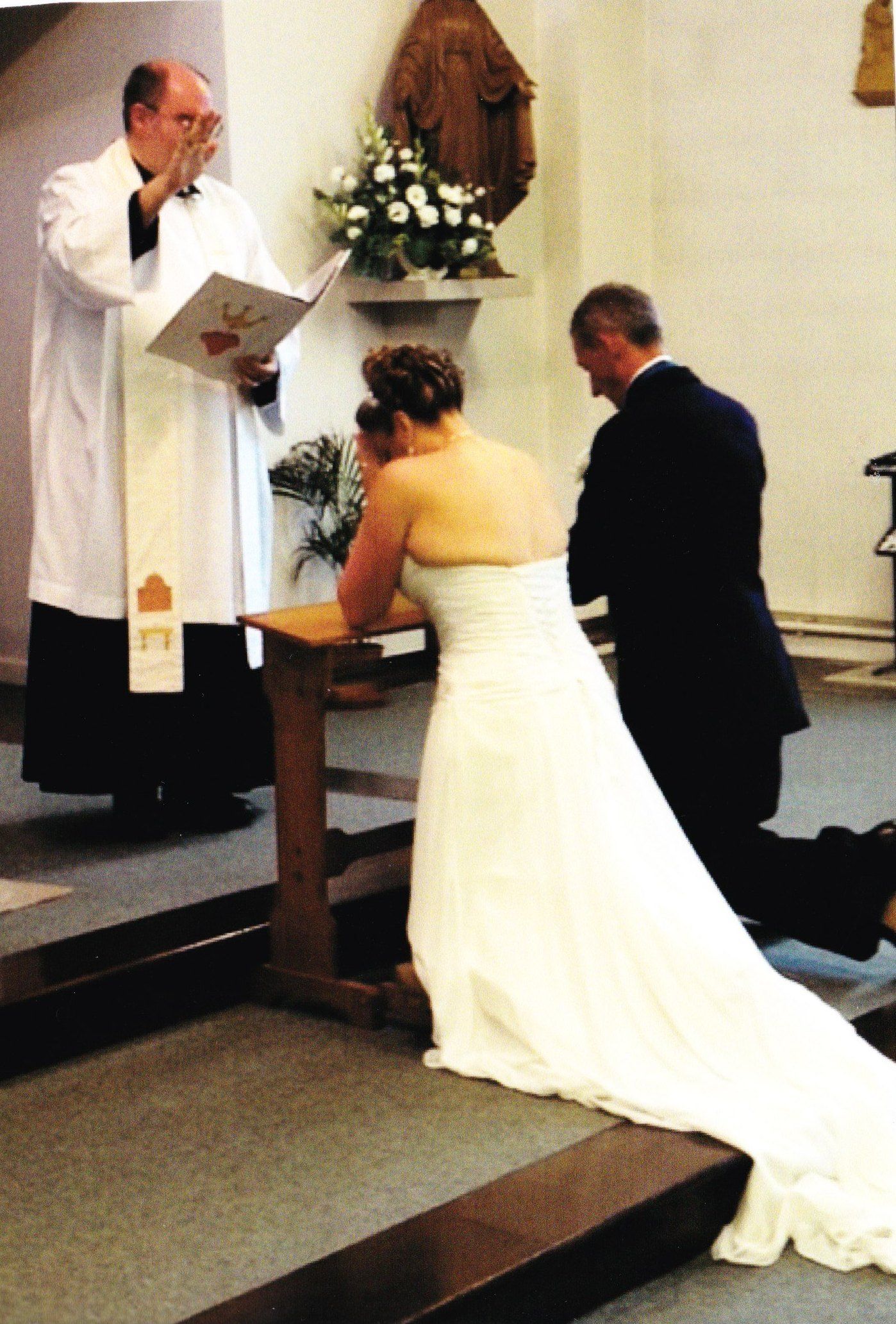
Getting Married
If you are visiting this page because you are newly engaged, congratulations! We wish you a long and happy married life together.
The first pages of the Bible tell of the creation of man and woman in the image and likeness of God. The first followers of Jesus spoke of heaven as the "wedding-feast of the Lamb" and of marriage and as a "mystery" reflecting God's love for human beings. When a man and a woman commit themselves to each other before God, Jesus said this forged an unbreakable union of their two lives by recalling what the plan of the Creator had been "in the beginning": "So they are no longer two, but one flesh."
The steps to getting married in the Catholic Church are quite detailed and can vary due to individual circumstances. Church rules (canon law) require that the paperwork be started and authorised by the Parish Priest who covers the place where the couple (or one Catholic partner in a couple) actually lives.
Applying for a Catholic Wedding
If you are alive in Llanederyn, Pentwyn, Pontprennau or St Edeyrn's Village, you must arrange the necessary paperwork through the Parish of St Philip Evans who must start your wedding application, even if you wish to get married elsewhere.
If you wish to be married in St Philip Evans Church, but do not live within our parish boundaries, you must first approach the parish priest of the place where you actually do live. Once he has agreed that you are free to marry within the rules of the Catholic Church, you should contact us at St Philip Evans to arrange a date for the wedding ceremony.
If you’re a Catholic but you wish to get married other than in a Catholic ceremony, be aware that the Catholic Church will not recognise you as married unless special permission is given for this. The permission (technically called ‘dispensation from canonical form’) may be given if your partner is an active member of another worshipping tradition and the ceremony will take place according to their rites.
The Archdiocese of Cardiff’s Marriage and Family Life Office will lead you online to a variety of resources for supporting marriage.
I'm engaged to a non-Catholic. Can I still get married in church?
Most of the weddings we perform are between a Catholic and someone who isn't. There is a little more church paperwork involved in authorising a wedding to someone who's not Catholic, but there's no bar to them marrying a Catholic in a Catholic Church as long as they are comfortable with that.
As with all Catholic weddings, both spouses must establish that they are free to marry according to the Catholic Church's understanding of marriage; your parish priest will guide you through this.
I'm a Catholic but I got civilly married. Can I have this blessed in church?
In general, yes. As long as you and the person you civilly married were free to marry (see answer above) according to Catholic understanding at the time you got married, you can have this recognised and blessed by the Catholic Church.
The usual procedure is to apply ‘to get married’ as detailed above – the only difference is that there is no need for a Registrar to attend. The ceremony will be just like a regular wedding but without a few declarations which would have been made for legal reasons. Some couples make this a big white wedding; others make it an intimate family affair with a handful of witnesses.
In some cases it happens that a Catholic returns to faith and wants their marriage to ‘count’ but their spouse is unwilling to go through with a church ceremony of making vows again. In this scenario there is an alternative process called radical sanation; if this applies in your case please speak to the Parish Priest.
What will my Catholic wedding cost?
The Catholic Church does not charge for its sacraments, but it is customary to make an offering to the minister conducting the wedding, and a donation towards maintenance costs of the church.
There will be a charge associated with the required Marriage Preparation course, and also a legal fee for the civil registration of any wedding.
If an organist or other musician attends, they will also charge a fee. Separate fees and booking arrangements apply if you wish to hire the Parish Hall for a reception afterwards.
